If your ideal Colorado lifestyle includes room for horses, trailer space, and easy access to the trail, Parker deserves a closer look. It offers a rare mix of suburban convenience, open-space riding opportunities, and nearby rural parcels that can support a true equestrian setup. Whether you are buying or selling, understanding how horse-friendly living actually works here can help you make smarter decisions. Let’s dive in.
Why Parker Appeals to Horse Owners
Parker stands out because it blends everyday convenience with a strong equestrian identity. You can find access to trails, equestrian facilities, and horse-centered community activities without giving up proximity to shops, services, and major Front Range connections.
That said, not every property with a Parker address is set up for horses. Some homes are inside the Town of Parker, while others are in unincorporated Douglas County. That difference matters because zoning, animal allowances, and land-use rules can vary by jurisdiction.
Where Horse Properties Are More Likely
Within Parker itself, true horse properties are generally more likely to be found in the town’s AG zoning district. Parker’s code lists AG as the acreage-oriented base district intended for uses such as farming and livestock grazing, while more typical in-town residential districts start at much smaller lot sizes.
For example, Parker’s SF1 district starts at 8,000 square feet, while AG requires a 10-acre minimum lot size. In practical terms, that means many traditional neighborhoods in town are not the natural fit for a full horse-property setup.
Just outside town, unincorporated Douglas County often offers more of the parcel types horse buyers are looking for. Buyers may see zone names such as A1 Agricultural One, LRR Large Rural Residential, RR Rural Residential, and ER Estate Residential when searching acreage near Parker.
It is also important to remember that a Parker mailing address does not always mean the property falls inside the Town of Parker. Douglas County notes that mailing addresses may reflect mail service rather than jurisdiction, so you should always verify where the parcel is actually located before making plans for horse use.
What Makes a Property Truly Equestrian-Friendly
A horse property is about much more than acreage alone. The most useful question is whether the parcel can support the way you plan to live with horses on a daily basis.
Start with the basics:
- Zoning that permits your intended horse use
- Enough land for turnout and barn placement
- Room for feed storage and manure handling
- Trailer access, turnaround space, and parking
- Functional fencing and usable pasture areas
- Verified utility, well, septic, and road-access details
Douglas County ties hoofed-animal allowances to animal units and zoning. The county also distinguishes between private horse ownership and commercial horse boarding or training, which may require formal land-use review.
That distinction is especially important if you are thinking beyond personal use. A property that works well for keeping your own horses may not automatically be approved for boarding, lessons, or training operations.
Barns, Sheds, and Supporting Structures
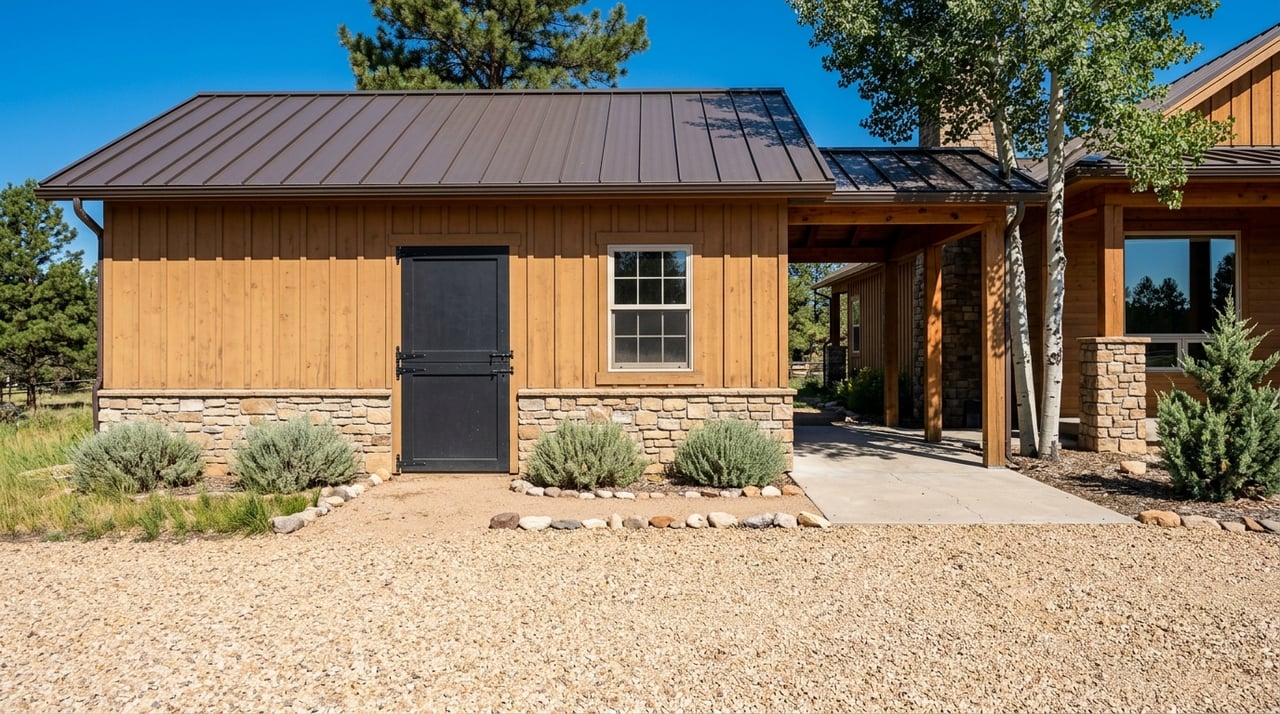
In horse country, outbuildings can be just as important as the home itself. Barns, tack rooms, run-in sheds, and storage structures all affect how functional the property will be.
Inside Parker, accessory structures are generally capped at 25 percent of the principal building footprint unless a special approval applies. The town also requires animal-keeping accessory uses to be on lots with an occupied dwelling unit and to comply with accessory-use rules.
That means buyers and sellers should think about horse improvements as part of the overall property setup, not as stand-alone features. A barn may look impressive, but its compliance and usefulness depend on zoning, lot conditions, and the primary residence.
In Douglas County, detached barns and similar structures usually require standard building review. The county requires items such as a site plan, utility and easement verification, drainage and erosion control submittals, and a driveway permit for accessory structures that are not attached to the primary building.
Larger detached buildings and prefabricated steel structures may also need engineer-stamped foundation and design documents. If you are buying with plans to build or expand, this is worth confirming early.
Rural-Living Checks Buyers Should Not Skip
Horse properties often come with moving parts that are easy to miss during an online search. Before you assume a parcel can support your plans, verify the practical details.
Key items to review include:
- Water rights n- Well feasibility
- Septic feasibility
- Survey boundaries
- Deed restrictions
- HOA covenants
- Road and driveway access
Douglas County notes that parcels larger than two acres may be candidates for individual wells and septic systems, but buyers still need to confirm what zoning and site conditions require. This is one of the biggest reasons equestrian purchases benefit from a careful, property-specific review.
Trails and Riding Access in Parker
For many buyers, the lifestyle value of Parker goes beyond the property line. The local trail network is a major part of the appeal.
According to the Town of Parker, the community maintains more than 27 miles of paved multi-use trails and more than 6 miles of natural-surface equestrian trail along Cherry Creek. The town also notes a 1.8-mile natural-surface multi-use loop in Idyllwilde, plus about eight miles of the Cherry Creek Trail running through Parker.
The Parker Equestrian Trail is another standout feature. The town says it runs roughly parallel to the Cherry Creek Trail through Parker’s open-space corridor, giving riders a meaningful local amenity that supports an active horse-centered lifestyle.
Douglas County also lists a broad network of soft-surface, non-motorized trails and open-space areas that allow horseback riding. These include Bayou Gulch Regional Park and Open Space, Cherry Creek Trail, East-West Trail, Hidden Mesa, Highline Canal Trail, Nelson Open Space and Swallowtail Trail, and Pike Hill and Ringtail Trail, among others.
Bayou Gulch Passive Area is an especially useful local reference point. Douglas County describes it as a Parker park with 4.68 miles of soft-surface trail, which adds to the area’s appeal for riders who want nearby options.
Equestrian Facilities That Shape the Lifestyle
Parker’s horse-friendly reputation is also supported by visible, active equestrian destinations. These facilities help turn horse ownership into a lifestyle rather than just a land use.
Colorado Horse Park is one of the best-known regional anchors. It describes itself as a 148-acre venue that hosts hunter-jumper, dressage, and eventing competitions, and it is open to the public for general admission. It also sits next to Bayou Gulch Open Space trails that are open for equestrian use.
Salisbury Equestrian Park is another major local asset. The Town of Parker describes it as a 160-acre facility with a lighted arena, warm-up arena, dressage arena, equestrian building, and access to the Cherry Creek Trail.
Community involvement also has a long history here. Parker Trail Riders, a nonprofit active since 1962, offers gymkhanas, trail rides, parades, clinics, and related horse activities at Salisbury Equestrian Park.
Tips for Buyers Seeking Horse Property
If you are shopping for equestrian-friendly living in Parker, focus on function before aesthetics. A beautiful home only works as a horse property if the land, access, and rules support your intended use.
A smart buyer checklist includes:
- Confirm the property jurisdiction first
- Verify zoning and animal allowances
- Review whether horse use is private or commercial
- Check barn, shed, and trailer functionality
- Assess fencing, pasture condition, and drainage
- Verify road access and turnaround space
- Review well, septic, and utility feasibility
- Consider distance to trails and equestrian facilities
For buyers who want a riding-centered lifestyle, proximity to Cherry Creek Trail, Bayou Gulch, Salisbury Equestrian Park, or Colorado Horse Park can be just as important as the home itself.
Tips for Sellers Marketing Horse Property
If you are selling an equestrian-oriented property near Parker, your best selling points are usually the practical features that make daily horse ownership easier. Buyers in this niche want to know how the property performs, not just how many acres it includes.
The details most likely to resonate include:
- Barn capacity
- Tack space and run-in shelters
- Pasture usability
- Fencing condition
- Drainage
- Trailer maneuvering room
- Access to trails or equestrian venues
This is where presentation matters. A horse property often has a stronger story when the land, improvements, and lifestyle benefits are framed clearly and visually, especially for buyers relocating from outside the area.
Why Local Guidance Matters
Equestrian real estate can be rewarding, but it is rarely plug-and-play. In Parker and the surrounding Douglas County area, success often comes down to understanding the overlap between zoning, land use, infrastructure, and lifestyle goals.
Whether you are looking for a private horse property, preparing to sell a rural parcel, or exploring acreage with long-term plans in mind, a thoughtful strategy can help you avoid expensive surprises. If you want expert help identifying lifestyle-fit properties or presenting a horse property with the right story, connect with Drake Guidry for a private consultation.
FAQs
What zoning should you look for in Parker horse properties?
- In Parker, the AG district is the clearest fit for farming and livestock-related use, while horse-friendly acreage outside town may fall under Douglas County zones such as A1, LRR, RR, or ER.
Can a Parker mailing address mean a property is outside Parker town limits?
- Yes. Douglas County notes that a Parker mailing address may reflect mail service rather than jurisdiction, so you should verify whether the parcel is actually in the Town of Parker or unincorporated Douglas County.
What should buyers verify before purchasing a horse property near Parker?
- Buyers should confirm zoning, animal allowances, well and septic feasibility, water rights, surveys, deed restrictions, HOA covenants, road access, and whether the site can support trailer access, manure handling, and turnout.
Are Parker trails available for horseback riding?
- Yes. The Town of Parker says it maintains natural-surface equestrian trails along Cherry Creek, and Douglas County also lists multiple soft-surface open-space trails in the area that allow horseback riding.
What equestrian facilities are near Parker, Colorado?
- Two notable local facilities are Colorado Horse Park and Salisbury Equestrian Park, both of which support Parker’s horse-friendly lifestyle with riding and event amenities.
What features help sell a horse property in Parker?
- The most valuable features often include functional barn space, fencing, pasture condition, drainage, trailer access, tack or shelter space, and proximity to trails or equestrian destinations.