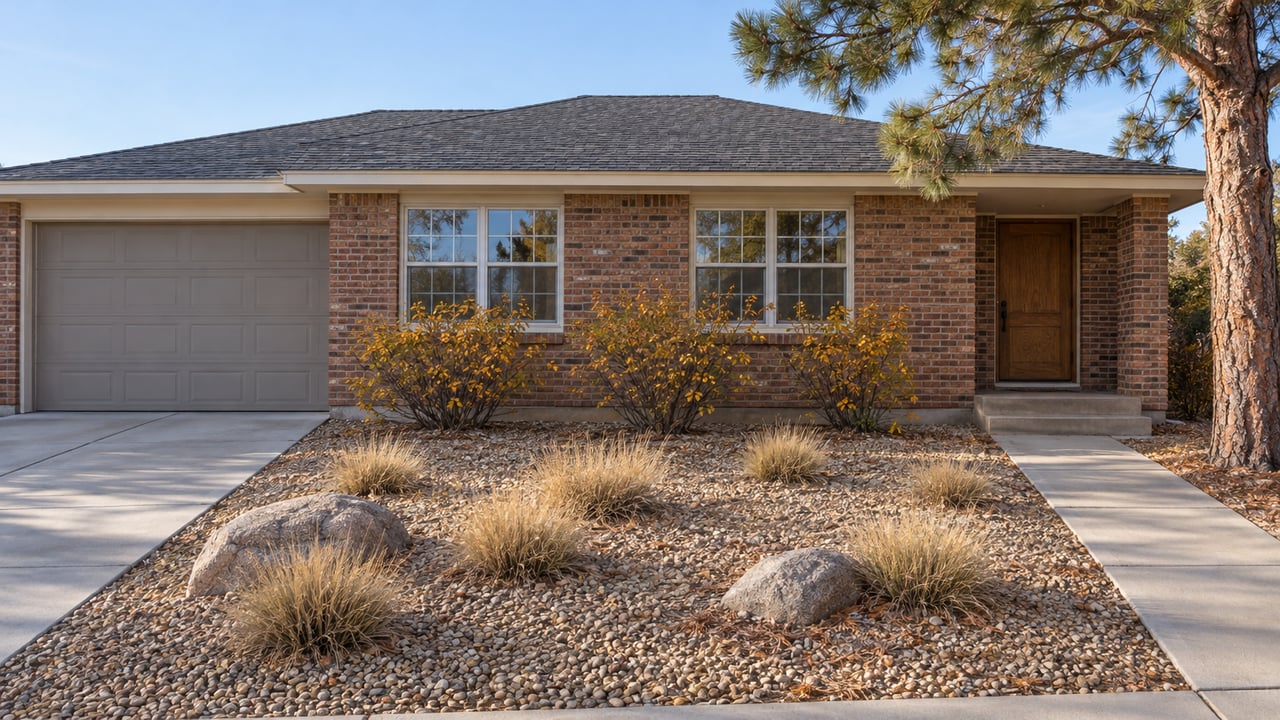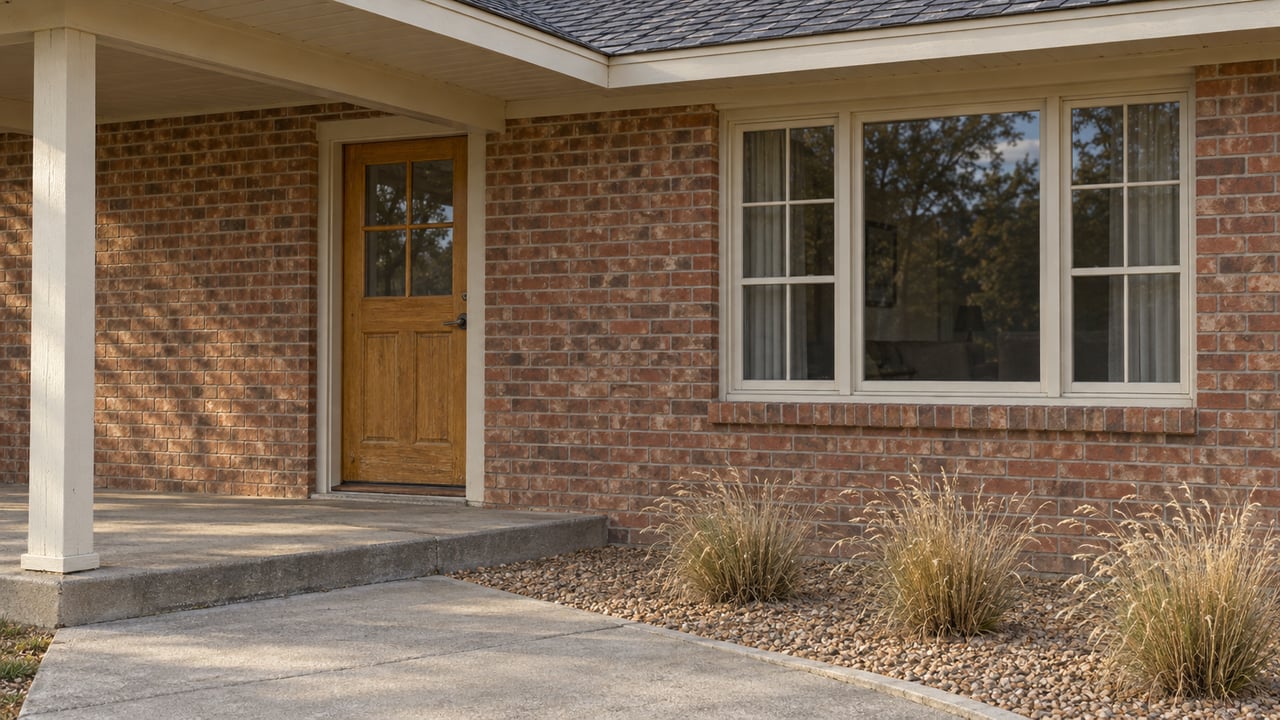
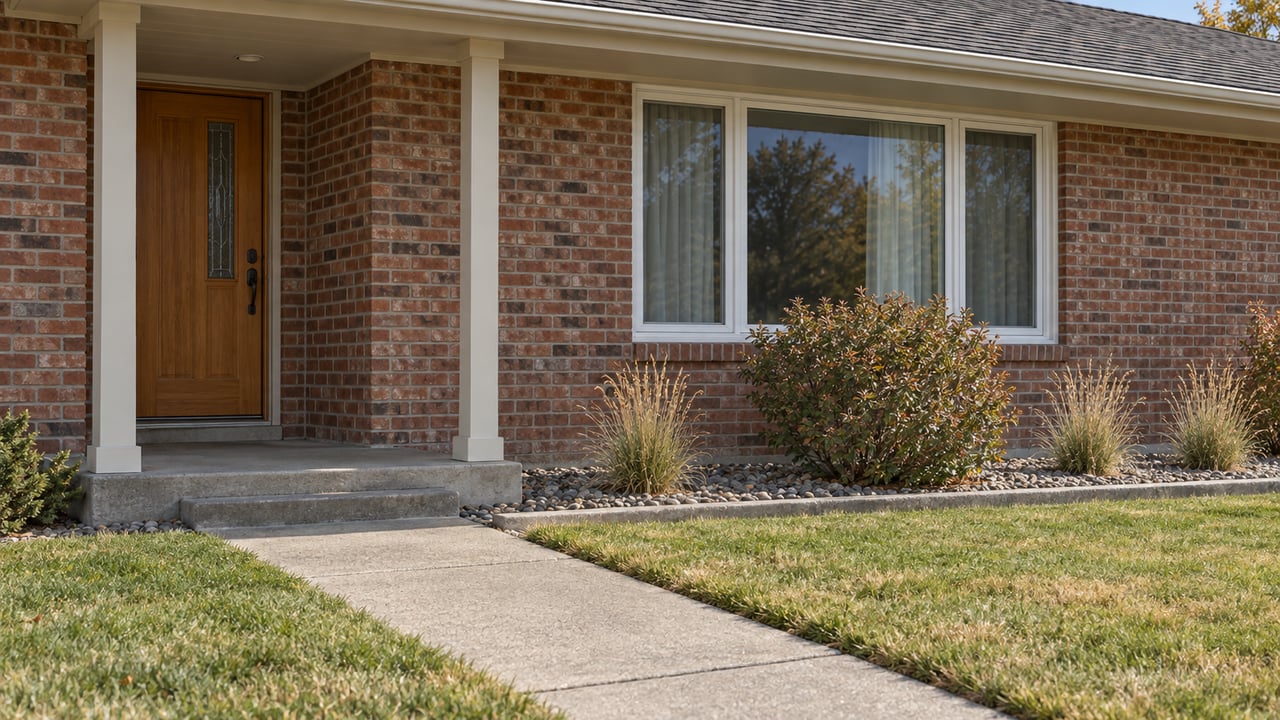
"It's very unusual if you do not see a seller concession," Pikes Peak Association of Realtors board president Andrea Warner told KOAA in September. She listed what those concessions now cover. Sellers are paying for mortgage-rate buydowns and lease buyouts, and in some cases they are paying off the buyer's bills.
In the same interview, Warner pointed to something the headline numbers hide. She said homes in the $400,000 to $600,000 range "are still moving right in that price range, but they're taking longer to sell than the very low and the very high." Mid-priced resale homes are selling slower because nearly every new-construction incentive in El Paso County this fall is priced into that same band. That leaves resale sellers competing against builders' credits and below-market rates.
Two measures that point in different directions
The standard way to rank price tiers is months of supply: how long current inventory would last at the current sales pace. The Colorado Association of REALTORS' September 15 report covered August 2026 single-family and patio homes in the Pikes Peak region. By that measure, the luxury tier looks like the slowest by far.
| Price tier, August 2026 | Months of supply | Share of sales |
|---|---|---|
| Under $400,000 | 3.6 | 27.7% |
| $400,000 to $600,000 | 3.9 | 44.5% |
| $600,000 to $1 million | 5.0 | 22.7% |
| Over $1 million | 8.6 | 5.1% |
The report also notes that six to eight months of supply is considered more desirable for higher-priced homes, while four to six is considered healthy overall. Judged against those different benchmarks, the luxury tier's 8.6 months is only slightly long. The middle tier's 3.9 is just under the healthy range. Even so, the middle tier carries the most listings by a wide margin. Warner's own El Paso County count is from the Wednesday before KOAA's September 11 story. It showed 1,411 single-family and patio homes listed between $401,000 and $600,000, against 646 below $400,000 and 406 at $900,000 or more.
Months of supply is a ratio, so it tells you how big a tier's inventory is compared with its sales pace. It says little about what sellers in that tier are up against. Warner's comment about speed concerns the second question, and it is the one that matters to anyone buying or selling between $400,000 and $600,000.
The competition in the middle band is new construction
The Colorado Springs Gazette reported on October 4 that areas near new construction are typically more of a buyer's market. Builders on the east side of Colorado Springs and south toward Fountain are offering closing-cost credits and lower in-house interest rates, which makes it harder to sell older existing homes.
The builders' own price sheets show where those incentives land. Almost all of them fall inside the band Warner described:
- Campbell Homes, Meridian Ranch. A $578,381 quick-move-in home is tagged with $40,000 in flex cash. Campbell's promotions page lists $69,100 in total buyer credits at Meridian Ranch, including that flex cash.
- Campbell Homes, Vista Grande. A $594,691 home is tagged with $40,000 in flex cash, part of $52,600 in total credits for the community.
- Empire Homes, Gardens at Banning Lewis Ranch. Quick-move-in Foxglove #503 A is priced at $570,179 and falls under Empire's Colorado Smart Move event. The event offers up to $30,000 on select quick-move-in homes for contracts written October 1 through December 31, 2026.
- Empire Homes, Gardens at Wolf Ranch. Quick-move-in homes are priced from $499,900 to $593,351.
- D.R. Horton, The Ridge at Lorson Ranch. Homes start at $385,000, including one listed at $450,990, and come paired with a 3.875% FHA or VA adjustable-rate mortgage promotion.
A resale seller with a $550,000 home in a 2000s subdivision is not just competing with similar homes on the street. Buyers touring that home may also be pricing a brand-new home a few miles east that comes with tens of thousands of dollars in credits. Builders have reasons to sell standing inventory before year-end, and the deadlines on these offers show it. Campbell's flex cash requires closing by December 31, 2026. D.R. Horton's rate requires a contract on or after August 31 and closing by December 15, 2026.
How a builder rate changes the monthly payment
Buyers in this price band usually compare homes by monthly payment, so the financing offers carry more weight than the price cuts. On October 4, the Gazette reported that the average 30-year fixed rate was 7.03% as of September 24. That compares with 6.30% a year earlier. The paper attributed part of the rise to the Federal Reserve's first rate hike in more than three years.
D.R. Horton's fine print gives a worked example. On a $495,000 home, its 5/1 FHA ARM at 3.875% assumes 3.5% down and shows a total monthly payment of $2,999. The VA version assumes 0% down and shows $2,873. Both figures include principal, interest, estimated taxes, mortgage insurance, homeowners insurance and HOA dues. The Gazette ran a separate affordability analysis on September 26. It estimated that buying the August median-priced $470,000 home with 20% down would take $94,000 upfront and cost nearly $3,200 a month, including estimated taxes and insurance.
The two calculations use different assumptions, so they aren't a direct comparison. Still, a new home priced $25,000 higher, with a fraction of the down payment, can show a lower monthly figure than a resale home bought conventionally. A resale seller who has already cut the price twice is working against that number.
The fine print also explains what those low rates involve:
- The rate is fixed for five years, then adjusts. The D.R. Horton disclosure lists a 5.989% APR on the FHA option and a 5.600% APR on the VA option. After five years, the rate can rise by up to 1% a year, with a lifetime cap of 5%, so the maximum possible rate is 8.875%.
- Builder-affiliated lenders are required. D.R. Horton's rate requires DHI Mortgage and may require the borrower to pay points. Campbell's flex cash requires one of two preferred lenders. Campbell's VA rate special is 4.75% for the first year, then fixed at 5.75%. It applies to contracts dated August 27 to October 15, 2026, and requires owner occupancy and a 720 minimum credit score.
- Advertised amounts don't always match. Empire's event page caps quick-move-in savings at $30,000, while one Wolf Ranch inventory card shows $45,000 in flex cash. Until the builder confirms in writing, the lower figure is the one to rely on.
- Some offers have already expired. Lennar's Fall Super Sale closed to new contracts on October 11, 2026. Its standing offer of up to $5,000 toward closing costs on select move-in-ready homes, with Lennar Mortgage, runs through December 15.
For military buyers, D.R. Horton's Main Street Stars program adds up to $2,000 toward closing costs or upgrades for veterans and active-duty service members, among others. It works with any lender and expires December 31, 2026.
Why the top and bottom tiers move faster
Warner suggested a financing explanation for each end of the market. Buyers in the middle may have fewer specialized financing programs than buyers at lower price points, and higher-priced homes may draw more cash buyers. A cash buyer at $1.2 million is largely unaffected by a 7.03% rate. A financed buyer at $500,000 feels every point of it, and that is the buyer builders are targeting.
The top tier is not immune. The $1 million-plus share of August sales fell 31.1% year over year. But the top tier has no builder sales offices offering 3.875% intro rates on the same streets, so its slowdown comes from fewer buyers, without that added competition for the buyers who remain.
Price cuts have spread across the market. Colorado Springs-area REALTOR Jay Gupta reported in the CAR release that 51.2% of active El Paso County listings had price reductions in August. Another agent in the same report cited 55.3% of inventory going through reductions. The two figures may use different denominators. Warner gave KOAA an example from a single neighborhood and price range. A fully remodeled home, priced lower than an unrenovated one nearby, received an offer on its first day. Another home first listed at $460,000 had been on the market more than 160 days. At this price point, a resale home that looks dated next to new construction tends to sit.
What the permit data suggests about next year
The builder discounts may not last. According to the Gazette, the Pikes Peak Regional Building Department had issued permits for only 42 new single-family homes by mid-September, against 181 for all of September 2025. Year-to-date detached single-family construction through August, at 1,802 homes, was up 6% from the same period last year. The 2023 Pikes Peak Regional Building Code took effect June 30, 2026, and adopted the Colorado Model Electric Ready and Solar Ready Code. Agent Eddie Hurt told the Gazette that many builders started homes before that deadline, expecting the code changes to add time and money to construction. If so, much of the inventory carrying today's incentives was permitted under the old code. Homes built to the new code have no published per-home cost estimate yet, but Hurt expects them to cost more to build.
For a middle-band buyer, that means the current stock of pre-code quick-move-in homes, combined with resale sellers who have to compete against it, may be a temporary situation.
FAQ
Which month does the latest data cover? The detailed price-tier figures are for August 2026. PPAR's September 2026 snapshot reports a $450,000 median and 59 average days on market across all property types. Because it uses a different scope, it can't be compared directly with August's $470,000 single-family and patio median.
Can a resale seller offer something like a builder buydown? Warner told KOAA that resale sellers are already funding rate buydowns as concessions. Concessions can be negotiated in a resale offer, but how they can be structured depends on the loan program.
Do builder incentives stack? Not necessarily. D.R. Horton's rate "may not be able to be combined with other available D.R. Horton offers." Campbell's listing-page flex cash and its rate special come with separate terms.
If you're weighing a resale home in the middle band against a quick-move-in home with builder incentives, Lux Estates can compare the two offers line by line. That includes total credits, lender conditions, ARM caps and what a resale seller may agree to cover. Schedule a Consultation before the year-end deadlines close.
This article is general information, not legal, tax or financial advice. Consult a qualified professional about your situation.